The world of fine jewelry and gemstones offers more than just aesthetic beauty; it represents a tangible asset class with a history of enduring value. For centuries, precious stones have been symbols of wealth, power, and permanence. Today, they are increasingly recognized as a viable component of a diversified investment portfolio, offering a hedge against inflation and market volatility. This guide delves into the characteristics, market dynamics, and investment potential of some of the world’s most sought-after gemstones, from the undisputed king, the diamond, to rare and captivating treasures like Tanzanite, Opal, Zircon, and Amber.
Understanding the factors that contribute to a gemstone’s value—rarity, durability, beauty, and market demand—is crucial for any aspiring investor. Each stone tells a unique story of geological wonder and cultural significance, and its investment journey is just as distinct. Whether you are a seasoned collector or a novice investor, this comprehensive analysis will equip you with the knowledge to navigate this sparkling market with confidence.
Diamond: The Unwavering Star of the Jewelry Market
For decades, the diamond has reigned supreme in the world of precious gems, a symbol of eternal love and a benchmark for value. Formed deep within the Earth’s mantle over billions of years, this crystalline carbon structure is the hardest known natural material, making it as durable as it is brilliant. Its unparalleled status in the market is not just due to its physical properties but also a result of masterful marketing and a well-established system for grading and valuation.
The Unbreakable Standard: The 4Cs
The value of a diamond is systematically determined by the 4Cs, a grading standard established by the Gemological Institute of America (GIA) that has become the universal language for describing diamond quality.
- Carat: This refers to the diamond’s weight, not its size. One carat is equal to 200 milligrams. While larger carat weights are rarer and thus more valuable, the other three Cs significantly impact the final price.
- Cut: Often considered the most critical factor, the cut refers to the quality of a diamond’s angles, proportions, and facets. A well-cut diamond will internally reflect light from one facet to another and disperse it through the top of the stone, creating maximum brilliance and fire.
- Color: For white diamonds, value is based on the absence of color. The GIA scale ranges from D (colorless) to Z (light yellow or brown). Truly colorless diamonds are exceptionally rare and command the highest prices.
- Clarity: This measures the presence of internal flaws (inclusions) and external blemishes. The clarity scale ranges from Flawless (FL) to Included (I3). The fewer inclusions, the rarer and more valuable the diamond.
Market Dynamics and Investment Stability
The diamond market has historically shown remarkable resilience. Its value is supported by consistent global demand for engagement rings and high-end jewelry. While market prices can fluctuate, high-quality diamonds have proven to be a reliable store of value over the long term. Investors typically focus on high-grade stones, usually over one carat, with excellent cut, color (D-G), and clarity (FL-VS2), as these are the most sought-after and retain their value most effectively. The importance of a reputable grading report from institutions like the GIA cannot be overstated, as it provides an objective assessment and ensures the diamond’s authenticity and quality.

Tanzanite: Africa’s Rare Treasure Captivating Collectors
Discovered in 1967, Tanzanite is a geological phenomenon and one of the most exciting additions to the colored gemstone market in modern history. Found only in a small, four-square-kilometer area in the Merelani Hills of Northern Tanzania, near the base of Mount Kilimanjaro, its single-source origin makes it exponentially rarer than diamonds. This extreme rarity is a primary driver of its investment appeal, as the known deposits are finite and expected to be depleted within a few decades.
The Allure of Trichroism and Rarity
Tanzanite is a blue-violet variety of the mineral zoisite and is celebrated for its remarkable pleochroism—specifically, trichroism. This means it can display three different colors (blue, violet, and burgundy) when viewed from different crystallographic directions. When expertly cut and heated, the stone’s stunning blue-violet hue is enhanced, creating a depth and saturation of color that is virtually unmatched. The most prized Tanzanite stones exhibit a deep, saturated violet-blue, often compared to the finest sapphires.
Why American Collectors Are Enamored
The rise of Tanzanite, particularly in the American market, can be largely attributed to Tiffany & Co., which recognized its potential shortly after its discovery and became its primary distributor, naming it after its country of origin. This prestigious introduction cemented its status as a luxury gemstone. American collectors are drawn to its unique story, its breathtaking color, and its incredible rarity. As a relatively new gem, it offers an opportunity to invest in a stone with significant potential for appreciation as supply dwindles. The combination of its exotic origin, captivating beauty, and scarcity makes it a new favorite for both collectors and investors seeking assets beyond traditional choices.

Opal: The “Dream Stone” and Its Kaleidoscopic Charm
Opal stands apart from other gemstones due to its amorphous character and its unique ability to diffract light into a dazzling spectrum of colors. Known as “play-of-color,” this phenomenon is caused by the diffraction of light off sub-microscopic silica spheres. This vibrant, shifting display of spectral colors makes each opal a unique work of art, earning it the nickname “Dream Stone.” The intensity and distribution of its play-of-color are the primary determinants of its value.
Types of Opal and Their Value
While opals are found in several locations, Australia is the world’s most famous source, producing over 90% of the global supply, including the most valuable varieties.
- Black Opal: The rarest and most valuable type of opal, found primarily in Lightning Ridge, Australia. Its dark body tone (from dark grey to black) provides a dramatic contrast that makes the play-of-color appear more vibrant and intense.
- White Opal: Also known as light or milky opal, this variety has a white or light grey body tone. It is more common than black opal but can still display beautiful play-of-color.
- Boulder Opal: This type is characterized by a thin layer of precious opal that is naturally attached to its host rock, typically ironstone. The dark ironstone enhances the color play, similar to a black opal.
- Fire Opal: Named for its fiery background color of yellow, orange, or red, this variety may or may not exhibit play-of-color. It is primarily mined in Mexico.
A Guide to Purchasing and Investment
When investing in opal, several factors are crucial. The brightness of the play-of-color (from brilliant to subdued) and the dominant colors (red is the rarest and most valuable) are key. The pattern of the color play is also important, with broad, distinct patterns like “harlequin” being highly prized. Finally, the stone should be free of cracks or crazing. Because of its complexity, purchasing high-value opals requires expert evaluation. Investors should seek out reputable dealers who specialize in opals and can provide detailed information about the stone’s origin, type, and quality.

Zircon: Uncovering the Investment Value of Rare Colors
Often confused with the synthetic diamond simulant, cubic zirconia, Zircon is a magnificent and historically significant natural gemstone in its own right. As the oldest mineral on Earth, with some samples dating back 4.4 billion years, it possesses remarkable optical properties, including a high refractive index and strong dispersion, which give it a brilliance and fire that rivals that of a diamond. While colorless zircon is a popular natural alternative to diamond, its true investment potential lies in its rare and vivid colors.
The Secret of High-Value Hues
Most natural zircon is brown, but heat treatment can transform it into a stunning range of colors. The value of zircon is heavily dependent on the rarity and quality of its color.
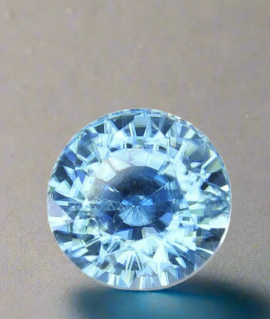
- Blue Zircon: This is the most popular and commercially valuable variety. The vibrant, pastel-to-sky-blue shades are produced by heating brown zircon. Finding stones with pure, intense blue color and high clarity can be challenging, making them a desirable asset.
- Red Zircon: Pure red is one of the rarest colors for zircon. These stones are highly sought after by collectors and can command very high prices, especially when they exhibit a rich, well-saturated hue without brown overtones.
- Green Zircon: Green is another extremely rare color for zircon. These stones are almost never heat-treated and owe their color to minute traces of radioactive elements. Their rarity makes them a prime collector’s item.
Why Zircon is a Smart Investment
For investors looking for value, zircon offers a compelling opportunity. It is still relatively undervalued compared to other colored gemstones like sapphires and rubies, yet it possesses exceptional beauty and, in certain colors, significant rarity. As consumer awareness grows and the distinction from its synthetic namesake becomes clearer, the demand for high-quality, rare-colored zircons is poised to increase. Focusing on well-cut stones with intense, pure colors and good clarity is the key to a successful zircon investment.

Amber: The Organic Gem with Timeless Investment Potential
Unlike the other gems in this guide, amber is not a mineral but an organic gemstone formed from the fossilized resin of ancient trees. Cherished for millennia, it is often called “the gold of the north” and has been used in jewelry and decorative objects since antiquity. Its investment value is rooted in its age, rarity, and the fascinating prehistoric inclusions it often contains.
From Ancient Antiques to Modern Jewelry
Amber’s appeal spans from antique pieces with historical significance to modern, high-fashion jewelry. The value of amber is determined by several factors:
- Color: While most commonly associated with honey-yellow and cognac colors, amber can be found in a wide spectrum of shades, including white, red (cherry amber), and green. The rarest and most valuable is blue amber, found primarily in the Dominican Republic, which exhibits a stunning blue fluorescence under UV light.
- Clarity: Clear, transparent amber is generally more valuable than cloudy pieces, although certain patterns can be desirable.
- Inclusions: Perhaps the most fascinating aspect of amber is its ability to preserve prehistoric life. Pieces containing perfectly preserved insects, plant matter, or even small vertebrates are exceptionally rare and highly prized by both scientists and collectors. The type, size, and condition of the inclusion dramatically increase the amber’s value.
Assessing Amber’s Investment Value
The market for high-quality amber, especially pieces with rare colors or significant inclusions, remains strong. Antique amber jewelry, particularly from the Art Nouveau and Art Deco periods, has significant collector value. When investing in amber, authenticity is paramount, as the market contains many imitations made from plastic or modern resins. Seeking out reputable dealers and, for very high-value pieces, obtaining laboratory certification can safeguard an investment in this unique, time-capsule gem.
Frequently Asked Questions (FAQ)
- Q1: What is the most important factor to consider when investing in a gemstone?
- While all factors (like the 4Cs for diamonds) are important, rarity is often the most critical driver of long-term value appreciation. A gemstone’s rarity can be due to its geological origin (like single-source Tanzanite), a specific rare color (like red zircon), or unique features (like inclusions in amber). Rarity, combined with high demand, creates the ideal conditions for a strong investment.
- Q2: Is a gemstone’s certification really necessary for an investment?
- Absolutely. For any significant gemstone investment, a certificate from a reputable, independent gemological laboratory (such as GIA, AGL, or Gubelin) is non-negotiable. This report provides an objective, third-party assessment of the gem’s identity, origin, and quality characteristics. It confirms authenticity, protects you from fraud, and is essential for both insurance purposes and future resale.
- Q3: How does the origin of a gemstone affect its value?
- A gemstone’s origin can have a significant impact on its value, often adding a premium to its price. For example, Burmese rubies and Colombian emeralds are historically considered the finest and command higher prices than stones from other locations. For Tanzanite, its single-source origin in Tanzania is a fundamental part of its value proposition. Origin adds to the stone’s story, rarity, and desirability among collectors.
- Q4: Are colored gemstones a better investment than diamonds?
- It depends on the investment strategy. Diamonds offer a more stable, liquid market with a universally understood grading system. They are a reliable store of value. High-quality colored gemstones, on the other hand, can offer higher potential returns due to their extreme rarity. However, their market is more complex and requires greater expertise to navigate. A diversified portfolio might include both a benchmark high-quality diamond and a selection of rare colored gems.