In the grand tapestry of filmmaking, every detail contributes to the story. While scripts, acting, and cinematography often take center stage, the subtle power of costume and accessories can convey volumes without a single word. Among these, jewelry holds a unique and potent role. It is not merely decorative; it is a narrative device, a symbol of status, a vessel of memory, and a key to a character’s innermost world. From the opulent diamonds of royalty to the simple token of a forbidden love, cinematic jewelry tells stories of power, passion, identity, and history. This guide explores the most iconic pieces of jewelry in film, dissecting their significance and celebrating their artistry.
We will journey through different eras and genres, examining how a simple brooch can represent the resilience of a nation, how a pearl necklace can define the constraints of royalty, and how a flash of ruby can signify untamable rebellion. These are not just props; they are integral characters in their own right, leaving an indelible mark on cinematic history and influencing real-world fashion for generations. Prepare to delve into the intricate details and hidden meanings behind the sparkle on the silver screen.
Royal Splendor and Aristocratic Grandeur
Cinema has long been fascinated with the lives of royals and aristocrats, and nothing captures their opulence and status quite like their jewelry. These pieces are often central to the plot, representing lineage, power, and the weight of tradition. They are meticulously researched and crafted to reflect historical accuracy and the specific grandeur of a dynasty or era.
The Habsburg Magnificence in Sissi 2 (1956)
The coronation scene in Sissi 2: The Young Empress is a masterclass in cinematic pageantry, largely thanks to the breathtaking recreation of the Habsburg dynasty’s crown jewels. The jewelry worn by Romy Schneider as Empress Elisabeth is not just lavish; it is a symbol of her ascension and the immense power of the Austro-Hungarian Empire. The intricate diamond sets, including the tiara and necklace, were designed to emulate the historical pieces, showcasing the unparalleled craftsmanship of the era. This jewelry serves to visually cement Sissi’s transformation from a free-spirited girl into a formidable monarch, her adornments becoming a beautiful but heavy cage of duty.
18th-Century Elegance in The Duchess (2008)
In The Duchess, the jewelry worn by Georgiana, Duchess of Devonshire (Keira Knightley), is a reflection of 18th-century aristocratic life. Her elaborate diamond necklaces, pearl chokers, and feathered hair ornaments are more than accessories; they are tools of social and political influence. Each piece signifies her status as a fashion icon and a political power player. The film uses her jewelry to contrast her glittering public persona with her private turmoil. For example, the famous three-strand pearl necklace she often wears represents the suffocating constraints of her marriage and societal expectations, a beautiful leash binding her to a life of gilded misery.
The Restrained Royalty of Roman Holiday (1953)
Not all royal jewelry is about overwhelming opulence. In Roman Holiday, Princess Ann’s (Audrey Hepburn) simple yet elegant pearl necklace is a powerful symbol of her royal identity. In the beginning, it represents the rigid etiquette and responsibilities she longs to escape. When she sheds her royal attire for a day of freedom in Rome, the absence of the necklace is as significant as its presence. The pearls define the princess, but their removal reveals the woman. This subtle use of jewelry highlights the theme of liberation and the conflict between duty and personal desire.

Symbols of Passion, Rebellion, and Identity
Beyond the courts of kings and queens, jewelry in film is a powerful medium for expressing a character’s core identity, their passions, and their defiance of convention. A single piece can encapsulate a personality, telling the audience who a character is or who they aspire to be.
The Fiery Rubies of Carmen (1983)
In Carlos Saura’s flamenco-infused adaptation of Carmen, ruby jewelry becomes a metaphor for the protagonist’s fiery passion and untamable spirit. The deep red of the gems mirrors the color of love, danger, and blood—all central themes of the story. Worn as bold earrings or a striking necklace, Carmen’s rubies are not just part of her costume; they are an extension of her rebellious nature. They flash and dance with her as she performs the flamenco, a visual representation of her refusal to be possessed or controlled, ultimately foreshadowing her tragic fate.
Southern Resilience in Gone with the Wind (1939)
Scarlett O’Hara’s emerald brooch in Gone with the Wind is one of cinema’s most memorable pieces. Acquired from her mother’s jewelry box, the green gem is a direct link to her beloved home, Tara, and the verdant lands of the pre-war South. Throughout the turmoil of the American Civil War and Reconstruction, the brooch is a constant symbol of her aristocratic heritage and, more importantly, her indomitable will to survive. It represents her connection to the land and her promise to never go hungry again. It is a piece of the old world that gives her strength to build a new one.
Gothic Immortality in Interview with the Vampire (1994)
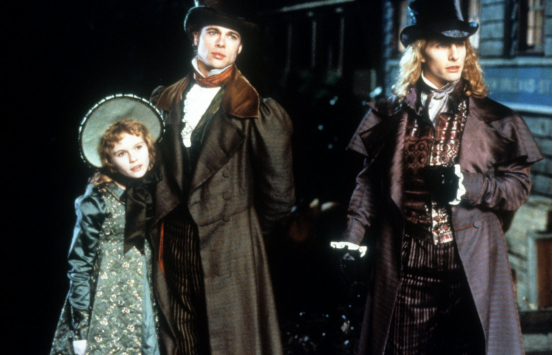
The jewelry in Interview with the Vampire defines the gothic aesthetic and the immortal loneliness of its characters. Louis de Pointe du Lac’s antique silver pieces, often adorned with dark stones, reflect his melancholic and brooding nature. Unlike the flamboyant gold favored by Lestat, Louis’s jewelry is understated and elegant, hinting at his lost humanity and the sorrow of his eternal life. The metallic coolness of the silver complements the film’s dark, romantic atmosphere, serving as a constant reminder of the cold, unchanging nature of the vampire.

Jewels in Times of Turmoil and Suspense
In narratives filled with conflict, war, or mystery, jewelry often transcends its material value to become a crucial plot device. It can be a secret message, a clue to a crime, or a fragile symbol of hope in a world of chaos.
A Token of Love in Casablanca (1942)
In the midst of the chaos of World War II, Ilsa Lund’s sapphire ring in Casablanca is a subtle but poignant symbol of her past and her conflicted heart. The deep blue gem represents the love she shared with Rick in Paris, a memory of a happier, more peaceful time. Its presence on her hand is a constant, silent reminder of her emotional turmoil as she is torn between her husband, Victor Laszlo, and the man she thought was lost forever. The ring is a secret token, a piece of a past that complicates an already dangerous present.
Wealth and Deception in Murder on the Orient Express (2017)
In the suspense-filled world of Agatha Christie, every detail is a potential clue. In the 2017 adaptation of Murder on the Orient Express, Mrs. Hubbard’s (Michelle Pfeiffer) opulent sapphire bracelet initially presents her as a wealthy, somewhat ostentatious American widow. However, like everything else on the train, the jewelry is part of a larger deception. It serves to build her character’s facade, a symbol of the wealth that makes her a target and a distraction from her true identity and motives. The bracelet is a piece of misdirection, a glittering red herring in a complex web of lies.
Fragile Illusions in A Streetcar Named Desire (1951)
Blanche DuBois’s delicate crystal earrings and rhinestone tiaras in A Streetcar Named Desire are central to her character. They represent her desperate cling to a fantasy of Southern belle elegance and purity in the face of the gritty, harsh reality of her new life. The cheap, fragile glass masquerades as expensive diamonds, perfectly mirroring Blanche’s own facade. As the story progresses and her mental state deteriorates, her attachment to these trinkets becomes more pronounced, symbolizing the shattering of her fragile illusions under the brutal honesty of Stanley Kowalski.

The Enduring Legacy of Cinematic Jewels
The impact of movie jewelry extends far beyond the closing credits. These iconic pieces have inspired fashion trends, fueled desires for specific gemstones and designs, and become part of our shared cultural lexicon. They demonstrate the artistry of costume design and the profound ability of a single object to tell a compelling story.
Ancient Majesty Reimagined in Cleopatra (1963)
Elizabeth Taylor’s portrayal of Cleopatra is legendary, as is the film’s “jewel feast.” The elaborate gold collars, cuffs, and headpieces, often featuring serpent motifs and turquoise, were not just accessories but a declaration of divine power. The film’s jewelry, while a Hollywood interpretation, sparked a massive revival of interest in Egyptian-style designs. The serpent arm cuff, in particular, became an iconic piece, symbolizing danger, seduction, and royalty, and continues to influence jewelry designers today.
From Screen to Style
The influence of these cinematic gems on popular culture is undeniable. Audrey Hepburn’s pearls in Roman Holiday solidified the gem’s status as a staple of timeless elegance. The dramatic flair of Scarlett O’Hara’s brooch and the gothic romance of Interview with the Vampire have inspired countless fashion collections. These films serve as a living museum, preserving historical styles and creating new ones. They remind us that jewelry is a powerful form of self-expression, capable of conveying our history, our identity, and our dreams, both on screen and off.
Frequently Asked Questions (FAQ)
- Q1: Why is jewelry so important in historical films?
- In historical films, jewelry is crucial for establishing authenticity and context. It helps define the era, the social status of the characters, and the cultural values of the time. For example, the lavishness of the jewels in The Duchess immediately communicates the wealth and social hierarchy of the 18th-century English aristocracy. It acts as a visual shortcut, providing the audience with a wealth of information about the world they are entering.
- Q2: How do costume designers choose jewelry for a character?
- Costume designers select jewelry through a meticulous process of script analysis, historical research, and character study. They consider the character’s personality, background, and emotional journey. A rebellious character like Carmen might wear bold, colorful gems, while a conflicted character like Blanche DuBois wears fragile, imitation pieces. The jewelry must not only fit the era but also enhance the narrative and reveal the character’s inner self.
- Q3: Are the jewels used in movies real?
- It varies greatly. For many productions, especially those with elaborate historical pieces, costume jewelers create stunning replicas using high-quality crystals, semi-precious stones, and plated metals. However, for some high-budget films, renowned jewelry houses like Cartier, Tiffany & Co., or Chopard will lend or create genuine, priceless pieces. For instance, in The Great Gatsby (2013), Tiffany & Co. designed an entire collection of real diamond and pearl jewelry for the film.
- Q4: Which movie has the most iconic single piece of jewelry?
- While many pieces are iconic, the “Heart of the Ocean” necklace from Titanic (1997) is arguably the most famous single piece of fictional movie jewelry. Although not on our list, its story-central role as a symbol of lost love and immense value set a benchmark. Among the classics discussed here, Scarlett O’Hara’s emerald brooch from Gone with the Wind is a strong contender for its deep symbolic connection to her character’s resilience and homeland.
- Q5: How has movie jewelry influenced real-world fashion trends?
- Movie jewelry has a profound influence on fashion. After a major film release, there is often a surge in demand for similar styles. The Egyptian revival sparked by Cleopatra is a prime example. Similarly, the art deco designs featured in films set in the 1920s regularly inspire modern jewelry collections. Films act as a powerful trendsetter, introducing historical or fantasy designs to a mainstream audience and making them desirable.


